
Genshin Impact Release Date and Launch Overview
Genshin Impact release date and Version 1.0 marked a global launch, delivering an immersive open-world RPG that quickly captivated players.
Genshin Impact released on September 28, 2020. If you just wanted the quick answer to when was Genshin Impact release, that’s the date. The game launched as Version 1.0 and arrived as a global release across several platforms, kicking off what quickly became one of the biggest live-service success stories in gaming. Developed by miHoYo — now known globally as HoYoverse — the free-to-play open-world RPG made a huge first impression with its scale, polish, and surprisingly ambitious multi-platform rollout.
When Was Genshin Impact Release: The Official Date and Version 1.0
The official global launch date for Genshin Impact was September 28, 2020. That was the Version 1.0 release, and it went live as a coordinated worldwide launch rather than a slow region-by-region rollout. At the time, that was honestly pretty impressive, especially for a studio that had not yet become the global giant players now associate with HoYoverse.
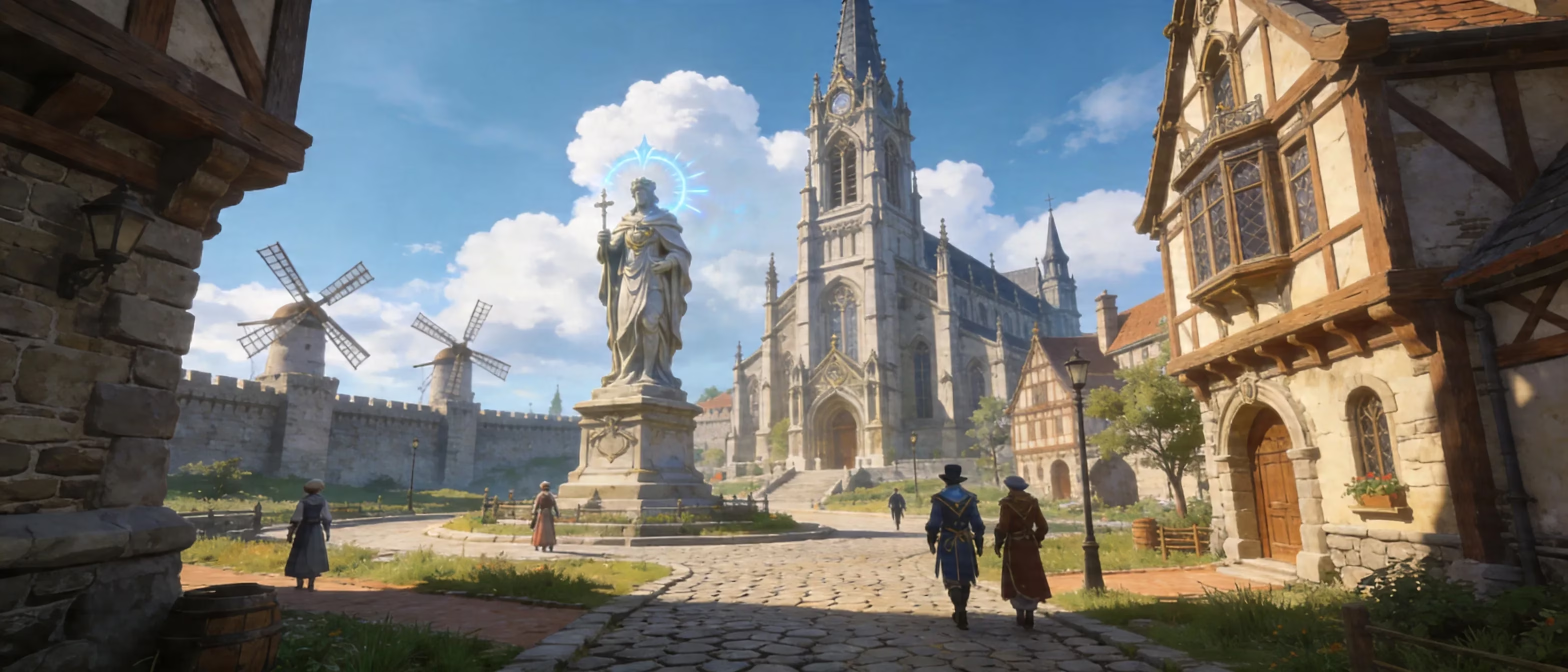
Version 1.0, titled Welcome to Mondstadt, introduced players to Teyvat with two major regions available right out of the gate: Mondstadt and Liyue. It also shipped with the core structure that still defines the game today, including Archon Quests, Story Quests, Domains, exploration-based progression, and the climbing and gliding systems that immediately drew comparisons to The Legend of Zelda: Breath of the Wild.
The developer name can also trip people up when they look back at older coverage. Early reports refer to miHoYo, while newer announcements use HoYoverse, the company’s global publishing brand. It’s the same studio lineage, just under different branding depending on the era.
Version 1.0 also established several systems that became central to Genshin’s identity:
-
Wish system: The gacha banner structure with pity mechanics
-
Resin: The stamina-style resource tied to certain rewards
-
Elemental reactions: Built around Anemo, Pyro, Hydro, Electro, Cryo, Geo, and Dendro
That foundation mattered a lot. Even at launch, Genshin didn’t feel like a small game testing the waters. It felt fully formed.
Genshin Impact Release Date by Platform
A lot of the confusion around when was Genshin Impact release comes from platform timing. PC and mobile launched immediately, but console support changed over time, and by 2026 the platform picture looks very different.
| Platform | Release Date | Status in 2026 |
|---|---|---|
| Windows PC | September 28, 2020 | Fully supported; 4K and high-refresh-rate capable |
| iOS | September 28, 2020 | Fully supported; requires iPhone 13 or newer for latest regions |
| Android | September 28, 2020 | Fully supported; Snapdragon 8 Gen 1 or equivalent recommended |
| PlayStation 4 | September 28, 2020 | Sunset April 8, 2026 — servers permanently shut down |
| PlayStation 5 | April 28, 2021 | Fully supported; native 4K/60FPS with DualSense haptic feedback |
| Xbox Series X/S | November 20, 2024 | Fully supported; includes exclusive cosmetic rewards for Xbox users |
| HarmonyOS NEXT | September 10, 2025 | Native port for non-Android Huawei devices |
| Nintendo Switch | Announced 2020 | Never released on original Switch; expected to target next-gen Nintendo hardware |
Some older sources list the PS4 version as launching on November 9, 2020. That date seems to come from regional storefront differences rather than the main global launch itself. HoYoverse’s own records, along with multiple reference sources, place PS4 in the original September 28 rollout, even if a few markets saw slight delays.
The biggest platform update in 2026 is easily the end of PS4 support. HoYoverse shut down the PlayStation 4 version on April 8, 2026, pointing to hardware limitations, larger update sizes, and the game’s increasing technical demands. Players on PS4 were pushed toward PS5, PC, Xbox, or mobile through the unified HoYoverse account system.
Genshin Impact Pre-Launch and Beta Timeline
Genshin didn’t just appear out of nowhere in September 2020. The lead-up started well before launch, with testing phases that helped build early momentum and gave players their first real look at the game.
The first closed beta happened in 2019, roughly a year before release. That early build already showed off a lot of the mechanics that would define the final game, including elemental reactions, open-world traversal, and the character gacha system. Footage from that period spread fast, and leaks from the beta only added to the hype.
By June 2020, miHoYo moved into a public beta phase. This was a big moment. It brought in millions of players, stress-tested the servers, and gave the team a much better read on how the game performed at scale. It also helped shape balancing and network stability before Version 1.0 officially went live.
One especially important detail: beta participation created a real sense of investment before launch. Accounts from the open beta carried over in a limited way, with a soft reset to keep things fair, and that encouraged players to engage seriously instead of treating the test like a throwaway preview. On top of that, the preregistration campaign kept building momentum by tying in-game rewards to milestone numbers.
By the time September 28 arrived, Genshin already had a massive amount of attention behind it. The launch wasn’t starting from zero; it was cashing in on months of growing anticipation.
Genshin Impact Release Timeline After Launch
After release, Genshin Impact settled into a steady expansion cycle, and each major version pushed the world of Teyvat much further. In practice, the game’s history is easy to track by region milestones.
Version 1.0 through 1.x focused on Mondstadt and Liyue, laying down the core cast, early Archon Quest structure, and the basic rhythm of exploration, farming, and team building. This was the era that established Genshin’s identity.
Version 2.0, released in August 2021, added Inazuma, the Electro nation inspired by feudal Japan. It was a huge turning point, not just because of the new region, but because characters like Raiden Shogun had a massive impact on the meta. The 2.x cycle also expanded Electro’s relevance and introduced Enkanomiya.
Version 3.0, released in August 2022, brought Sumeru and finally added Dendro as the seventh element. This changed team-building in a major way. Reactions like Quicken, Bloom, and Hyperbloom reshaped the meta so hard that even longtime players had to rethink established comps. If you were around for that shift, you probably remember how dramatic it felt.
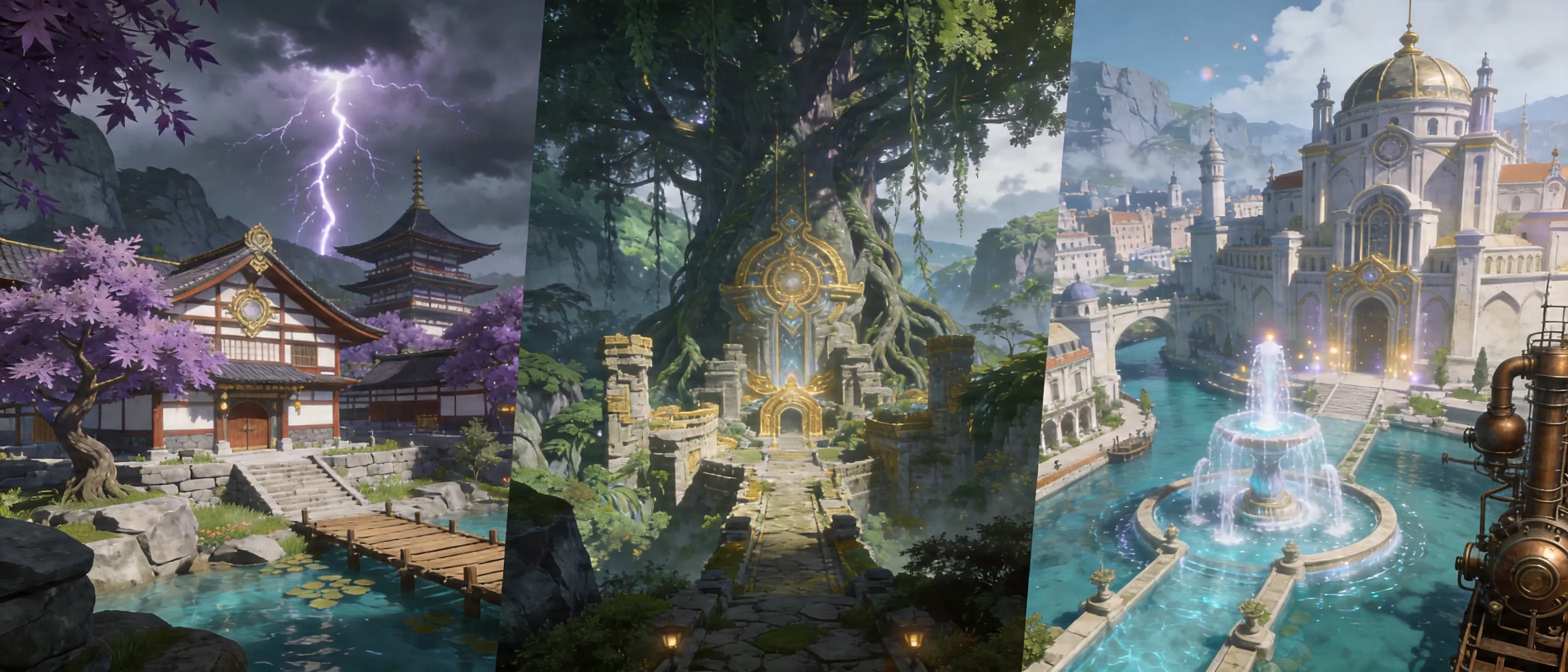
Version 4.0, released in September 2023, opened Fontaine and introduced underwater exploration. That alone gave the game a very different feel compared to earlier regions. From there, the six-week update cadence stayed consistent.
Version 5.x introduced Natlan, the Pyro nation, along with Saurian companion mechanics that significantly changed traversal. Then Version 6.0, released in September 2025 under the "Luna" naming convention, kicked off the Nod-Krai arc and started pushing the story toward Snezhnaya, home of the Cryo Archon and one of the most anticipated endgame destinations in the entire narrative.
As of Versions 6.4 and 6.5 in early 2026, Genshin is still delivering major updates on schedule, with new five-star units, fresh map expansions, and additional Archon Quest chapters continuing to roll out.
Why Genshin Impact’s 2020 Release Hit Hard
Genshin’s September 2020 launch landed at exactly the right moment, but timing alone wasn’t the whole story. The game hit because it offered something players really were not used to seeing in one package.
The first big advantage was cross-save and cross-play. From day one, players could move between platforms without feeling locked into one device. That was a serious edge back then. You could play on mobile while out, then jump onto PC later for a better visual experience, and your progress stayed with you.
The mobile side of the launch was especially shocking. Genshin delivered a full open world, flashy real-time combat, and orchestral presentation on smartphones in a way that felt far closer to console gaming than most people expected from a free-to-play title. That alone made it stand out.
Then there was the mix of systems. Genshin combined:
-
Open-world exploration with meaningful vertical movement
-
Action RPG combat built around elemental synergy
-
Gacha monetization layered on top of a large, story-driven adventure
-
Live-service updates with a reliable post-launch roadmap
That combination was a game-changer. The gacha model drew criticism, especially around spending ceilings for specific characters, but the pity system was relatively transparent, and the core game itself remained broadly accessible without forcing hard paywalls on exploration or story progression.
The numbers backed up the hype. Genshin made over $100 million in its first month, setting mobile revenue records at the time. It also passed 50 million downloads within that first month and moved beyond 100 million downloads across platforms not long after. Reddit, Discord, YouTube, and Twitch were flooded with build guides, theorycrafting, reroll debates, and tier lists. Pretty quickly, Genshin wasn’t just a hit game — it became its own content ecosystem.
Genshin Impact Release FAQ
Release Date Confusion
A lot of players remember different dates, and there are a couple of reasons for that. The main one is time zone differences. Genshin launched globally on September 28, 2020 UTC, but depending on where you lived, the local calendar date could shift slightly. In some Asia-Pacific time zones, players may have effectively seen the launch as September 29.
The other common point of confusion is PS4. Some reports from early on listed November 9, 2020 for the PlayStation 4 version, but that appears tied to later storefront availability in certain regions rather than the core launch window. HoYoverse’s records place PS4 in the original release lineup, even if regional timing was not perfectly identical everywhere.
One more thing matters here in 2026: the historical debate over PS4 dates doesn’t change the current reality. The PS4 version went offline permanently on April 8, 2026.
Starting Genshin Impact in 2026
If you’re wondering whether starting Genshin in 2026 is too late, the short answer is no. Honestly, it’s still a very solid time to jump in. There is a lot of content, sure, but the onboarding is much better than many people expect.
For platform choice, your best options are:
-
PC for the best overall performance and flexibility
-
PS5 if you want a smooth console experience
-
Xbox Series X/S if that’s your main ecosystem
-
High-end iOS or Android devices for portable play
The original Nintendo Switch never got a release, and PS4 support is gone, so those are off the table.
Account linking is handled through the HoYoverse unified account system. Your Adventure Rank, characters, inventory, and story progress are stored on HoYoverse’s servers rather than tied only to local hardware. If you’re starting fresh, it’s best to create and bind a HoYoverse account with a valid email right away so cross-platform access works cleanly from the start.
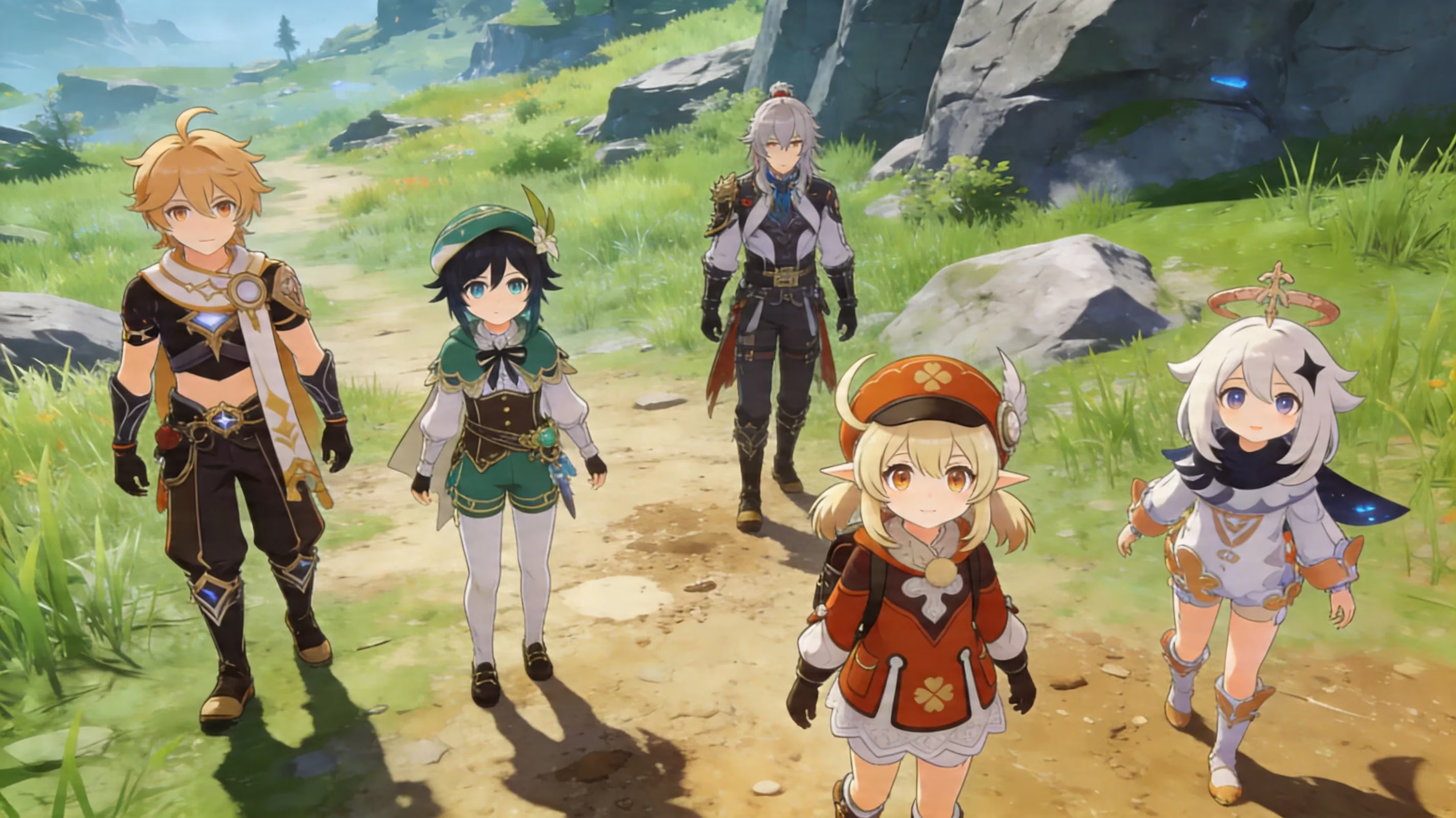
As of mid-2026, the game is in the 6.x era under the "Luna" naming convention, with the story moving toward the Snezhnaya endgame arc. HoYoverse has also added more catch-up support over the years, and rerun banners featuring strong Dendro, Hydro, and Geo units make it much easier for newer accounts to build competent teams without needing years of backlog investment.
Conclusion
So, if you came here asking when was Genshin Impact release, the answer is simple: September 28, 2020. That was the official launch of Version 1.0 across PC, iOS, Android, and PS4, and it marked the start of one of the most influential live-service games of its generation.
Since then, Genshin has grown from its 2019 beta roots and two launch regions into a massive ongoing RPG with multiple nations, major meta shifts, and a steady stream of updates. And if you’re thinking about starting in 2026, Teyvat is still absolutely worth exploring — if anything, there’s more to do, more characters to build, and more ways to play than ever before.
Comments (0)